
Building Smarter Offices in the Age of AI
At Trend Group, we’re driven by the idea that office design should put people first – while embracing smart technology and the possibilities of AI to support better ways of working. Our philosophy is simple: blend human experience with smart, considered design to create offices that flex, evolve, and inspire.
Our clients are choosing us because we offer:
- Smart workspace technology that makes offices comfortable and efficient
- Flexible, hybrid office fit-outs that respond to how people actually work
- Personalised environments supporting health, safety, and well-being
- Guidance in building green, people-centred offices
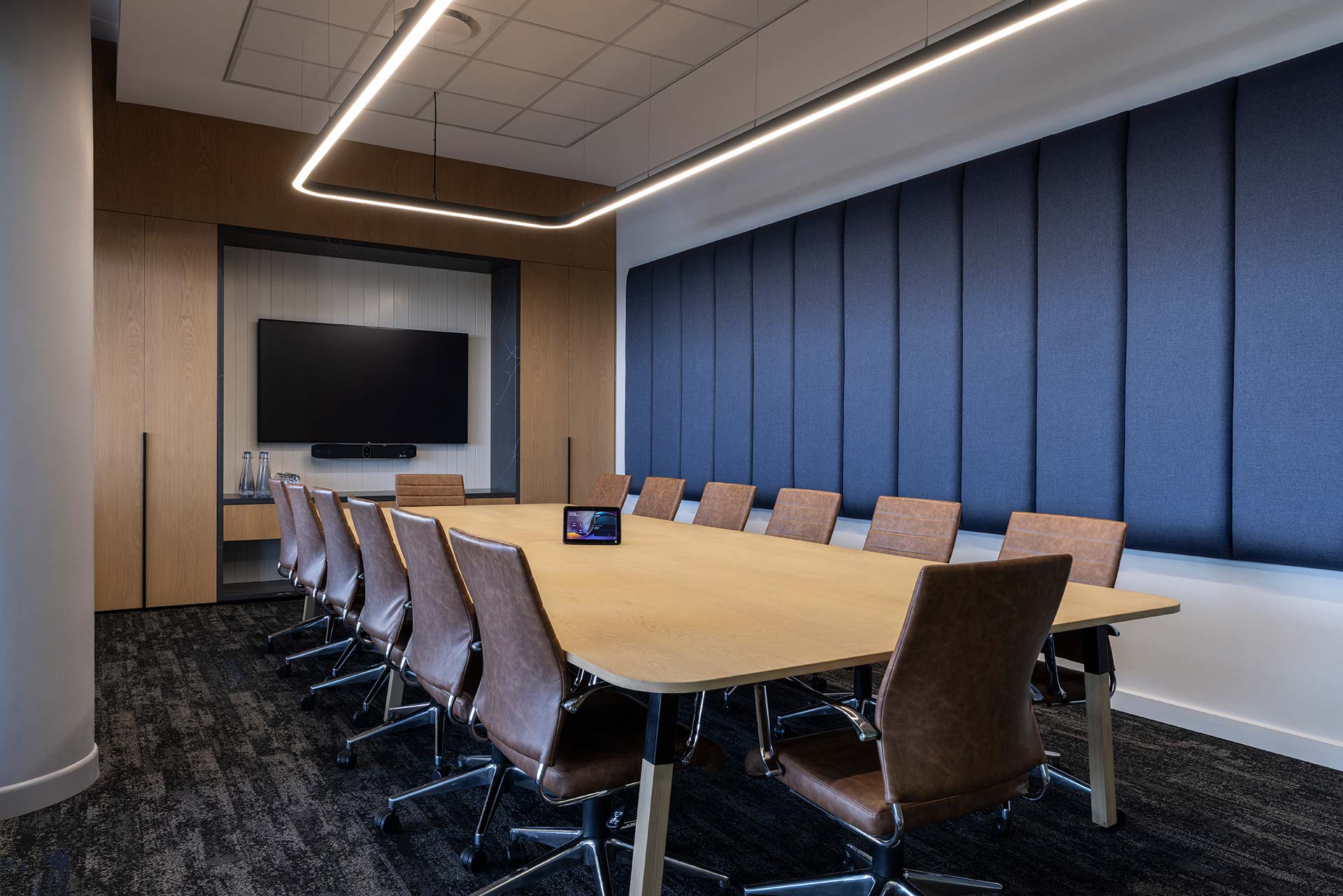
Data-Driven Optimisation: The New Standard
Modern offices are overflowing with data – from badge swipes to chair sensors. The challenge is turning this data into useful, actionable design. This is where AI can be helpful in pulling information, identifying underused spaces or when desks or rooms are too crowded.
By using data-driven workspace planning, we redeploy wasted square footage. Unused boardrooms might become wellness lounges or brainstorming nooks. Small huddle zones are placed where foot traffic is high. We let the numbers tell us what your team needs, then fit out spaces in ways that make more sense. For a closer look at Future-Proofing Your Dubai Headquarters, explore our article here
The numbers are convincing. A 2023 report showed that UK companies using AI in office design had 27 percent better space efficiency and a 23 percent jump in employee satisfaction.
This data-driven approach also helps us:
- Predict your space needs as teams grow or shrink
- Adjust layouts for hot-desking, project spaces, or quiet work areas
- Use occupancy trends to balance open plan and private zones

Personalised and Adaptive Office Environments
No two members of staff are the same – and now, their workstations don’t have to be either. Smart office design means desks, chairs, and entire rooms can be adapted to individual preferences with the help of IoT and AI. Just picture this: when you sit down, your preferred lighting and temperature kick in. Need a standing desk this afternoon? It adjusts for you.
Smart fitouts are shifting from static environments to adaptive ones, and the technology driving this includes:
- IoT office design that uses sensors for real-time feedback
- Lighting responsive to circadian rhythms and workload
- Posture sensors that help correct sitting habits
- Touchless entry and controls to reduce contact and boost hygiene
The impact goes beyond comfort. When a workspace actively supports the people in it, focus sharpens, energy lifts, and the small daily aches and pains quietly disappear.
For businesses, the numbers follow the feeling. Employees who feel good at work stay longer, complain less, and bring more to the table. The best offices are the ones working in the background, invisibly, on behalf of the people inside them.
Flexibility and Hybrid Work: Future-Proof Solutions
Remote work is here to stay, but so is the need for connection. Modern office design supports both by integrating AI and technology for flexibility. Hybrid office fit-outs combine hot-desking, private pods, open collaboration, and digital-first meeting spaces.
We use tools like VR to walk clients through the digital world of their new offices before committing to a fit-out. This allows teams worldwide give input, so the final design works for everyone.
Future-proof solutions include:
- Virtual reality office planning for stakeholder collaboration
- Reconfigurable layouts to quickly change zones as needs shift
- High-tech, plug-and-play meeting spaces that support in-person and remote teams
- Automated desk booking so everyone finds a workspace that fits


Technology for Enhanced Collaboration
Great ideas need space to grow and tools to help them. Intelligent meeting technology is now a foundation for the modern workspace.
AI can :
- Automatically transcribe meetings
- Take and sort notes
- Queue up relevant tasks in project management systems
Combine that with AR/VR meeting rooms, and suddenly hybrid brainstorming can feel as good as being in the same room together.
At Trend Group, we put a big focus on seamless technology integrations:
- Multi-screen, immersive AV systems for multi-location teamwork
- Smart booking and scheduling so meetings start on time
- Platforms that blend in-person and remote conversations smoothly
This way, collaboration becomes less of a chore and about getting things done. Employees notice when the tech “just works”, as do prospective clients.
Sustainability and Energy Management in Smart Offices
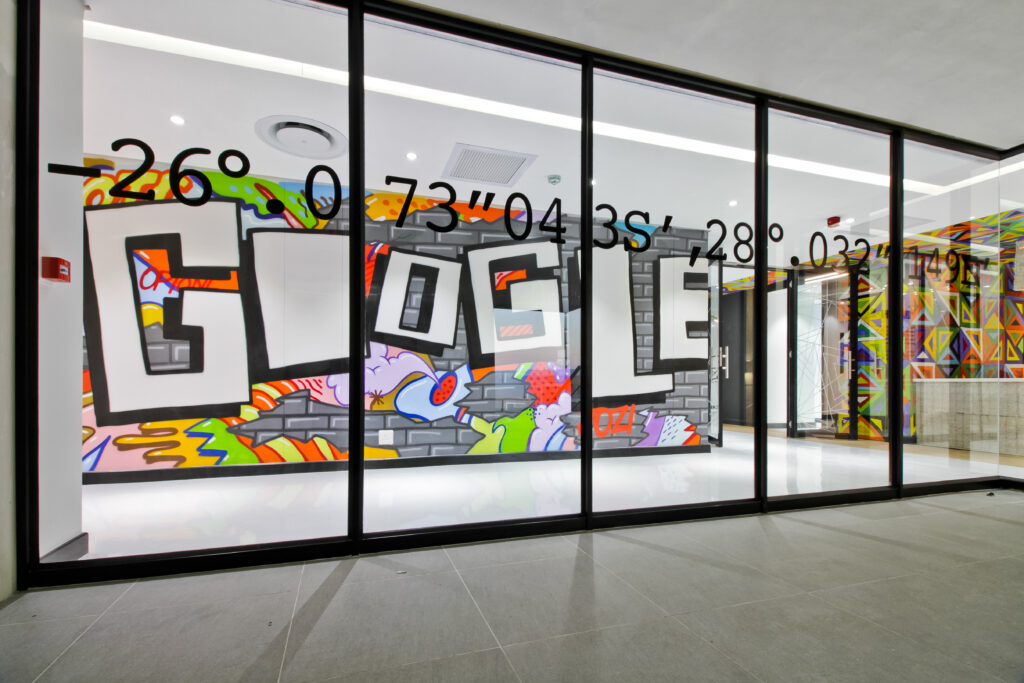
Trend Group has worked on a number of Green Star rated fit-outs, including Google’s Johannesburg headquarters. Making an office green isn’t just a feel-good extra, but a practical business decision. Read article
In turn, smart building systems can tune energy use to real demand. For example, when HVAC and lighting systems respond only to occupied areas, operational costs can drop significantly and carbon output reduced.
When designing, AI analytics can be used to:
- Select sustainable materials with low carbon footprints
- Recommend eco-friendly finishes and fixtures
- Monitor and adjust energy consumption
A well-built smart office can cut unnecessary energy use by up to 30 percent, boosting both the bottom line and the environment (AI in Office Design).

Safety, Security, and Predictive Maintenance
A workspace should protect its people and investments. AI supports safety through smart surveillance, touchless entry, and environmental monitoring for air quality and noise. In the instances where a system is about to fail – think a water leak, a door jam, or failing HVAC – predictive analytics will flag it before it becomes a crisis.
These processes could include:
- AI security monitoring with live alerts for unusual activity
- Building systems that self-report when they’re slipping out of spec
- Maintenance schedules that adapt based on real use, not just the calendar
The result is an office that feels safer, with less downtime. This way, workflows keep moving, and expensive repairs are avoided.
Prioritising Employee Wellbeing
Employee wellbeing technology isn’t just a perk; it’s a strategy for attracting and keeping talent. Modern sensors track air quality, noise, CO2, humidity, and even individual stress levels through wearable devices. When something’s off, the system adapts.
Our approach incorporates:
- Acoustic solutions in noisy zones
- Data-backed wellness areas for breaks and recovery
- Biophilic design elements, such as plants and natural light, tied to actual usage patterns
The payoff? Less sick leave, higher team engagement, and a reputation as a company people want to join. As pointed out in Gensler’s research, offices that invest in wellbeing see real gains in innovation and staff happiness (Gensler workplace trends).


Key Challenges When Embracing AI and Smart Technology
With great technology comes real responsibility. By talking openly with clients about the challenges, every step is thoughtful and secure.
Key considerations include:
- Data privacy: Sensitive occupancy, wellbeing, and personalisation data must be handled with care for compliance.
- Cybersecurity: Smart offices must be designed with top-tier network and device protection.
- Change management: Not every team adapts to new tech at the same pace. We provide training and support to ease the way.
- Budgets and ROI: Showing how the upfront costs in smart office design pays off over time through energy savings, better space use, and improved staff retention.
Trend Group’s hands-on, collaborative approach addresses each of these up front, so projects stay on track and results are measurable.
The Future - AI-Ready Offices and Human Experience
Office technology will continue to move fast. The offices of tomorrow will adapt in real-time, scaling up (or down) as your team shifts. They’ll support wellness by design as a core element, rather than an afterthought.
Future-proofing now means designing flexible frameworks with movable walls, IoT office design furniture, and systems ready to integrate new tech as it arises. Importantly, the real focus stays on people. As seen in leading trends, technology and design must always enhance the human experience, not add complexity or stress.
At Trend Group, we stay ahead of how technology is changing the way people work. We design and fit out offices that are ready to incorporate smart systems, so your workspace isn’t just built for today, but primed for whatever tomorrow brings.


Frequently Asked Questions on AI in Office Design
How is AI transforming office layout and spatial planning?
AI tools are being used to analyse real-time occupancy data, identifying underutilized areas within an office. This allows companies to convert unused spaces into collaborative zones or wellness areas. The use of AI-driven insights ensures that spatial planning is data-driven and aligned with how employees actually use the workspace, resulting in more flexible and efficient office layouts.
In what ways do smart technologies personalise the office environment for employees?
Smart desks and IoT sensors are increasingly used to adjust lighting, temperature, and even desk height based on individual user preferences and circadian rhythms. This level of personalisation not only boosts comfort and productivity but also supports employee wellbeing throughout the workday.
How does AI support hybrid and flexible work arrangements in modern office design?
AI integrates tools such as Virtual Reality (VR) and high-tech collaboration platforms to support hybrid teams, helping to bridge the gap between remote and in-office employees. By optimising layouts for flexible use and enabling seamless connectivity, AI ensures that offices accommodate both collaborative in-person sessions and virtual teamwork.
What role does AI play in energy management within office buildings?
AI can automate HVAC and lighting systems based on real-time occupancy, ensuring that energy is used only where and when it’s needed. This not only reduces energy consumption and operational costs but also contributes to sustainability initiatives by minimising wastage.
Can AI improve workplace safety and maintenance?
Yes, AI enhances building safety through advanced security surveillance that monitors for unusual activity. Additionally, predictive maintenance powered by AI can identify potential issues with building systems before they become significant problems, reducing downtime and optimising the maintenance schedule.
Partner with Trend Group to Transform Your Workspace
AI and technology are rewriting the rules for office design and fit-out. The best workplaces are no longer just places to sit and work – they are interactive, evolving environments that attract talent, bolster culture, and deliver proven savings.
If you want an office that truly supports your team, let’s talk. At Trend Group, we integrate technology into our design-and-build process. We help businesses build offices that adapt, delight, and perform.
Ready for a workspace that works as hard as you do?
Reach out to Trend Group and take the next step toward a smarter, healthier, and more inspiring office.
